

Rethinking Everyday Materials
This Month’s Focus on Energy Awareness and Smarter Material Choices
As the month continues, we at Neutral Carbon Zone are turning our attention to the often unseen energy behind the materials we use every day. From office supplies to packaging, understanding the true energy cost of common materials helps us make more informed, sustainable choices. This month, we highlight the hidden energy intensity of paper production and why reducing, reusing, and recycling materials plays a vital role in lowering emissions and supporting a low-carbon future.
The Hidden Energy Behind Paper
Looking Beyond First Impressions
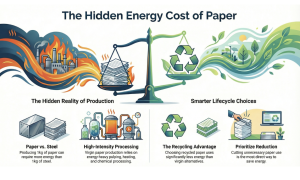
Paper is frequently viewed as the more sustainable option when compared with industrial materials such as steel. However, producing virgin paper is a highly energy-intensive process, requiring significant heat, electricity and chemical treatment to break down wood fibres into pulp. When measured by weight, the energy required to produce one kilogram of paper can rival and in some cases exceed that of producing one kilogram of steel.
This insight reinforces the importance of responsible material use. By reducing unnecessary paper consumption, choosing recycled paper products and supporting circular material systems, organisations and individuals can significantly cut energy demand and associated emissions. Sustainability is not always about what appears greener at first glance it is about understanding the full lifecycle impact of the choices we make.
The Energy Benefits of Recycled Paper
Beyond What Meets the Eye
Choosing recycled paper can save a substantial amount of energy compared with virgin paper. Based on lifecycle analyses, producing recycled paper generally uses around 40–70% less energy than making paper from virgin wood pulp, because it bypasses the most energy‑intensive stages like wood pulping and chemical treatment.
For example, recycling one tonne of paper can save roughly 3,000–4,100 kWh of electricity, which is enough to power a typical home for months. Recycled paper also tends to require less water and generate fewer emissions than virgin production, further reducing environmental impact.
Using recycled paper not only reduces energy use but also conserves water, lowers greenhouse gas emissions and supports landfill diversion, making it a clear win for energy, climate and resource conservation.

Something New is on the Horizon…
Welcome to March, where we’re closing out our financial year on an exceptionally strong note. Behind the scenes, we’ve been hard at work refining what we do best: making it simpler for you to measure your environmental impact.
This past month, we’ve rolled out meaningful improvements to our portal, focusing on streamlining data collection and input so you can capture more accurate emissions information with less friction. Alongside this, we’ve made significant strides in developing our AI infrastructure, which is already helping our team operate at peak efficiency. Come the new financial year, we’re excited to put this same technology in your hands, enabling you to better understand your reports and dive deeper into your carbon reporting insights.
On the first of April, we’re formally launching our new branding and redesigned portal – a culmination of these improvements wrapped in a fresh visual identity. Our updated NCZ branding reflects the evolution and growth we’ve achieved as a business, and we’re genuinely thrilled to share this next chapter with you. The goal remains unchanged: to make your journey toward understanding and managing your carbon footprint as seamless and intuitive as possible.
Here’s to a new financial year ahead, and to continuing this progress together.

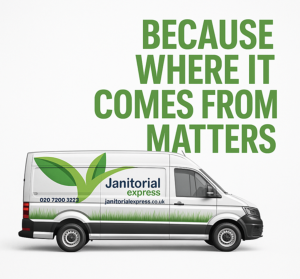
Leading the Way with ‘Local-First’ Delivery
For 35 years, Janitorial Express (JE) has been London’s go-to supplier of cleaning and hygiene products, operating from a central Islington hub. In the cutthroat facilities management (FM) sector, they shine through their “Local-First” model, delivering exclusively within London for shorter routes, fewer miles, and a dramatically lower carbon footprint compared to national rivals.
Their sustainability game goes deeper. They run a walk-in commercial machine repair workshop just three miles from the City, pushing clients to “repair, don’t replace” and cut downtime. The fleet is shifting to 100% electric vehicles, while their NTRL product line features unbleached paper from recycled kraft cardboard. ESG efforts even extend to backing local wildlife rescues, fostering biodiversity alongside business.
How Neutral Carbon Zone (NCZ) Empowered Their Journey
Janitorial Express’s green ethos hit a snag, blue-chip clients demanded detailed, verifiable Scope 3 emissions data across their 400+ suppliers and thousands of products.
As representative David Gourlay put it, it was “a hell of a job.”
Partnering with NCZ changed everything. NCZ’s practical expertise integrated seamlessly with their IT systems, categorizing products into seven material groups (like paper, metal, and wood) and applying cost-based carbon metrics pulled straight from their ERP.
The result? Auditable Power BI reports that transform raw data into actionable insights.
A self-serve portal on the JE website is currently in the development phase. Among the first in FM, Janitorial Express aims to have their customers get their hands on self-serve access to site-level carbon tracking through clear, visual dashboards. NCZ supports and backed Janitorial Express in amplifying their sustainability mission for maximum impact, turning a daunting compliance hurdle into a powerhouse differentiator, delivering data-backed sustainable products at competitive prices, making green choices a no-brainer and proving that doing good for the planet can also mean doing well for business.

Take the first step to Net Zero! See your carbon footprint.
Use our Carbon Calculator to estimate your footprint, earn the NCZ Blue Award, and get our Marketing Guide to celebrate your progress.
Measure it. Showcase it. Make an impact.
Unlock your free Carbon Calculator HERE.

Think steel is energy-heavy? Producing the same weight of paper can demand equal or greater energy than steel.
Paper often feels “lighter” or more sustainable at first glance, but the pulping, heating and chemical processing behind virgin paper production tells a different story. That’s why reducing paper use, reusing materials and choosing recycled options can make a bigger impact than we realise.
The good news?
♻️ Recycled paper uses significantly less energy
📉 Cutting unnecessary paper use really does matter
Sustainability isn’t always about what looks greener, it’s about understanding the full lifecycle.
Small choices. Real energy savings. 🌍

Smarter Paper Choices, Lower Energy Impact
As March arrives, it offers a fresh opportunity to reassess the everyday habits that influence our environmental footprint. Looking beyond first impressions allows us to make choices that genuinely reduce energy use and emissions.
This month, we encourage practical steps to rethink paper use and support more energy-efficient, circular practices.
Practical Tips for Reducing Paper’s Energy Impact:
- Choose Recycled Paper: Select paper products made from recycled content, which require far less energy to produce than virgin paper.
- Reduce Unnecessary Printing: Embrace digital documents and only print when essential to minimise paper and energy consumption.
- Reuse Where Possible: Extend the life of paper by reusing it for notes, drafts or internal use before recycling.
- Buy Responsibly: Support suppliers that prioritise sustainable forestry, efficient production processes and transparent supply chains.
Every conscious decision, however small, contributes to lower energy demand and a more sustainable future.

🗓️Innovation Lab 2026 | ACC Liverpool | 5th March 2026
Innovation Lab 2026 brings together forward-thinking leaders to explore the latest advancements in technology, strategy, and sustainable innovation. The event focuses on practical solutions that drive business transformation and long-term value creation. Attendees can expect insightful keynotes, collaborative discussions, and opportunities to connect with pioneers shaping the future.
🗓️CBRE Tree in a Million |Marston Vale, Bedfordshire, United Kingdom |18th March 2026
Led by CBRE, Tree in a Million is a large-scale environmental initiative supporting biodiversity and climate resilience through tree planting. The programme reflects a strong commitment to sustainability and community engagement. Participants contribute directly to meaningful carbon reduction efforts while strengthening environmental partnerships.
🗓️Beyond Hybrid: Designing the High-Performance Workplace | Leeds Marriott Hotel,UK |12th Mar 2026
This event explores how organisations can optimise workplace design to enhance productivity, collaboration, and employee wellbeing in a hybrid era. Industry experts will share insights on balancing flexibility with performance, while leveraging data-driven strategies for workplace efficiency. It’s an essential discussion for leaders navigating the evolving future of work.
🗓️The BSIA’s Spring Forum | Twickenham Stadium, UK | 17th Mar 2026
Hosted by the British Security Industry Association, the Spring Forum brings together security professionals to discuss emerging trends, regulatory updates, and sector challenges. The event offers a valuable platform for knowledge-sharing and peer engagement across the industry. Attendees gain actionable insights to stay ahead in an increasingly dynamic security landscape.

We invite you to join us in making March a month of mindful choices for our planet. Discover your carbon footprint anytime with our FREE Carbon Calculator HERE.
If you’d like to explore your carbon footprint in more detail, feel free to reach out at gozero@neutralcarbonzone.com, we’re always happy to help.
Together, we can support both the environment and the long-term sustainability of your business, making the journey simple and actionable.