
Saying the right things about sustainability has never mattered more. Customers are paying attention. Investors are scrutinising. And regulators are watching more closely than ever before.
For UK businesses, the Green Claims Code is not a distant compliance concern. It is the standard you’re already being measured against, whether you know it or not.
If your business makes environmental claims in marketing, on packaging, on its website, in sales materials or in tender responses, these principles should inform how those claims are written and evidenced. Getting it wrong carries real consequences. Getting it right is a genuine
What Is the Green Claims Code?
Published by the Competition and Markets Authority (CMA), the Green Claims Code explains how existing UK consumer protection law applies to environmental claims and sets out six principles businesses should follow to avoid misleading consumers. It exists because green marketing has grown faster than green action, and consumers have been misled as a result.
The Code does not prevent businesses from talking about their sustainability work. It requires them to do so honestly, accurately, and with evidence to back up every claim they make.
The CMA and ASA have made green claims an active enforcement priority. Regulatory reviews have led to investigations, formal commitments from major businesses to change their practices, and multiple ASA rulings against misleading advertising. The CMA also now has direct consumer enforcement powers and can impose substantial financial penalties for breaches of consumer protection law.
This is not a future risk. It is a present one.
The Six Principles Every Business Must Know
The Green Claims Code is built around six core principles. Together, they define what a lawful and honest environmental claim looks like.
- Claims Must Be Truthful and Accurate This sounds straightforward, but it catches out more businesses than you might expect. A claim is not truthful simply because you believe it. It must be accurate in fact and reflect the current state of your business, not an aspiration or a goal you have not yet achieved. Saying you are “carbon neutral” when you are working towards it is not the same thing. The distinction matters enormously under the Code.
- Claims Must Be Clear and Unambiguous Vague language is not a safe harbour. Broad terms such as “eco-friendly”, “sustainable”, “green” and “clean” carry a high risk of misleading consumers when used without a clear explanation of what they mean and evidence supporting the overall impression created. If you can’t define it precisely, you should not be using it. Specificity is not just good practice; it is a legal requirement.
- Claims Must Not Omit or Hide Important Information A claim can be technically true and still be misleading if it leaves out context that would change how a customer understands it. Highlighting a single positive environmental attribute while obscuring a significant negative one is a breach of the Code. The full picture matters, even when parts of it are unflattering.
- Comparisons Must Be Fair and Meaningful If you compare your products or business to a competitor, a previous version, or an industry average, that comparison must be based on like-for-like evidence. Claiming to be “greener” without specifying greener than what, in what way, and according to which measure, is unlikely to meet the standard. Misleading comparisons are one of the most common areas of non-compliance.
- Claims Must Consider the Full Life Cycle Businesses should consider the overall environmental impact of a product or service when deciding whether a claim could mislead. A claim may focus on a particular feature, such as recycled content or reduced packaging, but it must make that scope clear and must not imply that the whole product or service is environmentally beneficial if the evidence does not support that conclusion.
- Claims Must Be Substantiated Every environmental claim your business makes must be backed by robust, up-to-date evidence. That evidence must exist before the claim is made, not be assembled afterwards if someone asks questions. Independent verification significantly strengthens compliance and credibility.
The Claims That Are Getting Businesses Into Trouble
Understanding the principles is one thing. Knowing where businesses are actually falling short is another.
These are the patterns the CMA and the Advertising Standards Authority (ASA) are identifying most frequently.
Unqualified “net zero” or “carbon neutral” claims. Stating that your business or product is net zero or carbon neutral without clarifying the methodology, the scope, the time frame, or the offset strategy is a significant compliance risk. These claims must be specific and evidenced.
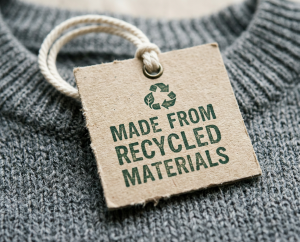
“Made from recycled materials” without context. If only a small percentage of a product is made from recycled content, saying it is “made from recycled materials” creates a misleading impression. Percentage and scope must be stated clearly.
Future commitments presented as current achievements. Pledging to reach net zero by 2040 is a commitment. It is not a claim about where your business is today. Conflating the two is one of the most common forms of greenwashing identified by regulators.
Broad sector-wide comparisons. “Lower emissions than conventional alternatives” needs to specify the alternative, the measurement basis, and the source of data. Without that, it is an unsubstantiated comparison.
Certifications used out of context. A certification that applies to one product or one part of your operations cannot be used to imply that your entire business or range meets that standard.
What Good Looks Like
Compliance does not mean saying less. It means saying what you can genuinely prove.
Businesses that get this right tend to share a few things in common. They measure their emissions consistently, retain credible supporting evidence and, where appropriate, obtain external review or verification. They understand which claims their data actually supports. They use clear, qualified language that reflects the reality of where they are on their journey. And they update their claims as their performance improves.
“We have reduced our Scope 1 and 2 emissions by 34% since 2021, verified by an independent third party, and we are working towards a validated net zero target by 2035” is a strong, compliant claim. It is also more compelling than a vague badge that says “eco-friendly.”
Specific claims build trust. Vague claims invite scrutiny.
The Business Case for Getting This Right
Beyond compliance, there is a strong commercial argument for taking the Green Claims Code seriously.
Customers are more informed than ever. B2B buyers, in particular, are demanding documentary evidence to support the sustainability claims of their suppliers. Procurement teams are asking for verified data, third-party certification, and measurable targets. Businesses that can provide all of that will win contracts. Those that rely on unsubstantiated language will lose them.
There is also the matter of reputation. A greenwashing accusation, even without formal enforcement action, can cause significant damage. Social media moves quickly. Journalists are actively investigating green claims. The reputational cost of getting this wrong can far exceed any short-term marketing benefit.
And for businesses that are already doing genuine, measurable sustainability work, inaccurate claims undermine the real progress they have made. Proper verification and clear communication protects the value of that work.
Practical Steps to Ensure Your Claims Are Compliant
If you are unsure whether your current environmental claims meet the standard set by the Green Claims Code, here is where to start.
Audit every claim your business currently makes. Review your website, marketing materials, packaging, social media, and tender documents. List every environmental claim and ask: can we prove this, right now, with independent evidence?
Qualify and contextualise. Replace broad, vague terms with specific, evidenced statements. State what you have measured, how, and by whom. Be clear about what is included and what is not.
Verify your data independently. Self-reported carbon data is increasingly viewed with scepticism by regulators, customers, and investors alike. Third-party verification is not just best practice; in many contexts, it is becoming a baseline expectation.
Do not make claims about where you are going as though you are already there. Be honest about your current position while communicating your ambition. The difference is not just ethical; it is legal.
Keep your claims updated. As your performance improves, update your claims to reflect it. Outdated claims, even if they were accurate when first made, can become misleading over time.
The Bottom Line
The Green Claims Code is not a barrier to talking about your sustainability work. It is a framework for doing so with integrity.
The businesses that will thrive under this scrutiny are not the ones that say the least. They are the ones that have done the work, measured the results, and can speak to their progress with confidence and evidence.
If your environmental claims are built on verified data and honest communication, the Code is not something to fear. It is something that works in your favour, because it holds everyone to the same standard.
And in a market where trust is increasingly the differentiator, that matters more than any headline claim.
Ready to make sure your sustainability claims are built on solid ground? NCZ provides independent carbon measurement and verification that gives your business the evidence it needs to communicate with confidence. Use our FREE Carbon Calculator to start benchmarking your emissions, or speak to our team about how we can support your journey to credible, compliant net zero.
Alan Stenson, CEO
NCZ