

As sustainability expectations evolve, businesses are being challenged not just to comply with regulations, but to demonstrate credible, science-aligned climate action. The Science Based Targets initiative (SBTi) and the Energy Savings Opportunity Scheme (ESOS) represent two of the most influential frameworks shaping corporate responses to the climate crisis in the UK and beyond.
While SBTi offers a pathway to align corporate emissions reduction targets with global net zero goals, ESOS enforces mandatory energy audits and efficiency improvements for large UK organisations. Together, they define the dual dimensions of modern sustainability management: voluntary ambition and mandatory compliance.
Understanding how these two frameworks intersect is key to building a robust decarbonisation strategy that satisfies regulators, investors, and customers alike.
Here we explore how SBTi and ESOS can be leveraged in tandem, not as separate obligations, but as strategic tools that help businesses translate compliance into competitive advantage. It also outlines how NCZ supports organisations at every step of this process, from carbon measurement and target-setting to verified reporting and certification.
Introduction: The Age of Accountable Action
The corporate sustainability landscape has changed dramatically over the past decade. The days when companies could claim “carbon neutrality” based solely on offsets are quickly fading. Today, transparency, data integrity, and science-based progress have become non-negotiable.
Two frameworks have emerged as cornerstones of this new era of accountability:
- The Science Based Targets initiative (SBTi) – a global standard that helps businesses align emissions reductions with the 1.5°C target of the Paris Agreement.
- The Energy Savings Opportunity Scheme (ESOS) – a UK government mandate requiring large companies to identify and implement energy efficiency opportunities.
While they differ in purpose, both frameworks serve the same ultimate goal: embedding sustainability into the heart of business decision-making.
The SBTi helps organisations plan for the long term by setting measurable, science-aligned emissions reduction targets across Scopes 1, 2, and 3. ESOS, on the other hand, ensures that large UK businesses act in the short term through rigorous energy assessments and efficiency audits every four years.
Understanding how these frameworks complement each other allows businesses to bridge the gap between regulatory compliance and strategic climate leadership.
Why Integration Matters
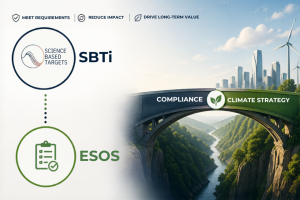
Businesses that approach ESOS and SBTi in isolation often miss the bigger opportunity. ESOS ensures compliance, a foundation of energy efficiency and operational accountability. SBTi builds on that foundation, turning insights into measurable, long-term emissions reduction goals that enhance reputation and attract investment.
When integrated, ESOS data can directly inform SBTi target-setting, while SBTi’s long-term focus helps prioritise which ESOS recommendations deliver the greatest strategic value. Together, they offer a powerful framework for data-driven decarbonisation.
NCZ’s mission is to make this integration simple, credible, and commercially valuable. Through our verified measurement methodologies (aligned with ISO 14064 and GHG Protocol) and tiered certification system (Blue, Silver, Gold, and Platinum), NCZ helps organisations turn compliance into leadership, proving that sustainability done right pays dividends in trust, resilience, and growth.
What is the Science Based Targets initiative (SBTi)?
The Science Based Targets initiative (SBTi) is a global partnership between the Carbon Disclosure Project (CDP), the United Nations Global Compact (UNGC), the World Resources Institute (WRI), and the World Wide Fund for Nature (WWF). Established in 2015, the initiative was designed to mobilise the private sector in setting science-based emissions reduction targets consistent with the goals of the Paris Agreement — keeping global temperature rise well below 2°C above pre-industrial levels, and pursuing efforts to limit it to 1.5°C.
In essence, SBTi provides businesses with a credible, data-driven framework for aligning their carbon reduction pathways with climate science. Rather than setting arbitrary or unverified goals, SBTi ensures that corporate targets are measurable, time-bound, and independently validated.
Why Science-Based Targets Matter
In the past, many organisations made voluntary climate commitments with limited accountability or scientific backing, however, investors, regulators, and consumers are now demanding proof of impact.
Science-based targets (SBTs) address this gap by providing:
- Credibility: SBTi targets are validated against robust, science-backed criteria.
- Comparability: Targets are consistent across industries, allowing stakeholders to benchmark progress.
- Accountability: Once approved, companies must publicly disclose and report on their progress annually.
- Resilience: Businesses aligned with the 1.5°C pathway are better prepared for future carbon regulation and market shifts.
Setting science-based targets signals that a company is serious about tackling climate risk, not merely for compliance, but as a core business strategy.
The Structure of SBTi
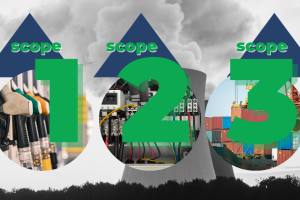
SBTi divides emissions across three categories, in line with the Greenhouse Gas (GHG) Protocol:
- Scope 1: Direct emissions from owned or controlled sources (e.g., company vehicles, on-site fuel use).
- Scope 2: Indirect emissions from the generation of purchased energy (e.g., electricity, heating, cooling).
- Scope 3: All other indirect emissions throughout the value chain (e.g., purchased goods, business travel, waste, logistics, use of sold products).
For most companies, Scope 3 emissions account for over 70% of their total footprint, making their inclusion critical for a complete decarbonisation strategy.
How SBTi Targets Are Set
Setting SBTi-aligned targets follows a defined methodology:
- Measure and Baseline
A company must first measure its current emissions (Scopes 1, 2, and 3) following ISO 14064 and GHG Protocol standards. This establishes a baseline year against which future reductions will be tracked. - Choose a Target-Setting Approach
SBTi offers several target-setting methods depending on sector and data availability, including:
a. Absolute Contraction Approach: Reducing absolute emissions by a set percentage in line with global carbon budgets.
b. Sectoral Decarbonisation Approach (SDA): Linking emission reductions to sector-specific pathways.
c. Economic Intensity Approach: For financial institutions and others, focusing on emissions relative to economic value. - Submit for Validation
Targets are then submitted to the SBTi for review and validation, ensuring they meet the required level of ambition (1.5°C or well-below 2°C). - Communicate and Implement
Once approved, companies must publicly announce their targets and develop an implementation roadmap with clear milestones. - Report and Review Progress
Annual disclosures via platforms like CDP help maintain transparency and accountability. Targets should be reviewed and updated every five years to remain consistent with the latest climate science.
SBTi for SMEs
Recognising that small and medium-sized enterprises (SMEs) have limited resources, SBTi introduced a streamlined route for businesses with fewer than 500 employees.
SMEs can commit directly to near-term (by 2030) emission reduction targets without undergoing the full validation process required for large corporations. This makes credible target-setting accessible, affordable, and actionable, enabling smaller organisations to demonstrate climate leadership within their networks and supply chains.
Recent Updates to SBTi Criteria (2024–2025)
SBTi continuously refines its criteria to reflect evolving climate science and corporate best practice. Key recent updates include:
- Mandatory Scope 3 inclusion for all companies where these emissions account for more than 40% of their total footprint.
- Short-term and long-term targets: Near-term targets (5–10 years) are now required for all participants, while long-term “net zero” targets (by 2050 or sooner) are strongly encouraged.
- Alignment with ISO 14068-1: SBTi’s frameworks are increasingly integrated with emerging international standards for carbon neutrality verification.
- Sector-specific guidance: Tailored methodologies for industries such as manufacturing, construction, finance, and ICT.
These updates reinforce SBTi’s position as the gold standard for credible emissions reduction targets.
The Business Case for Adopting SBTi
SBTi participation delivers tangible benefits beyond compliance.
- Investor Confidence: Investors increasingly use SBTi validation as a proxy for climate credibility. The initiative is referenced by major indices and ESG frameworks, including CDP and MSCI.
- Regulatory Readiness: SBTi alignment prepares businesses for evolving UK, EU, and disclosure requirements (e.g., CSRD, SECR, and TCFD).
- Procurement Advantage: Major buyers now favour suppliers with validated SBTi targets, particularly in construction, FM, and manufacturing sectors.
- Operational Efficiency: Target-setting drives process improvements, energy optimisation, and cost savings.
- Brand Reputation: Public commitment to SBTi signals authenticity in sustainability communication, mitigating greenwashing risk.
Businesses that align with SBTi are not just mitigating risk; they are creating competitive advantage through leadership, trust, and innovation.
NCZ and the SBTi Pathway
At NCZ, we view SBTi not as a tick-box exercise, but as a transformative framework for business growth. Our team supports clients in reporting transparently through our recognised Blue, Silver, Gold, and Platinum certification pathway, aligned with ISO 14064 and GHG Protocol.
For NCZ clients, SBTi integration is the next logical step after achieving verifiable certification. It transforms measurement and reporting into long-term, science-aligned climate strategy, one that protects business continuity and strengthens stakeholder confidence.
What is ESOS?
The Energy Savings Opportunity Scheme (ESOS) is a mandatory energy assessment and audit framework established by the UK government under the EU Energy Efficiency Directive (2012/27/EU), now retained in UK law post-Brexit. Administered by the Environment Agency (EA), ESOS requires large organisations in the UK to measure and report on their total energy consumption. This includes buildings, industrial processes, and transport. It is required every four years.
The goal of ESOS is simple but powerful: to identify and unlock cost-effective energy-saving opportunities that improve efficiency, reduce energy use, and lower carbon emissions.
Since its introduction in 2014, ESOS has evolved significantly, with Phase 4 currently in progress (2023–2027). Each phase has refined requirements to ensure businesses not only audit energy use but also take action towards genuine reductions.
Who Needs to Comply with ESOS?
ESOS applies to large UK undertakings, defined as organisations that meet any one of the following criteria on the qualification date of the phase:
- Employ 250 or more people, or
- Have an annual turnover exceeding £44 million and an annual balance sheet total exceeding £38 million, or
- Are part of a corporate group that meets the above thresholds collectively.
Importantly, subsidiaries of global corporations that operate in the UK are also subject to ESOS if the parent company meets the qualification criteria.
Failure to comply can result in significant civil penalties, including fines of up to £50,000 and additional daily penalties for non-submission, alongside reputational damage due to public disclosure of non-compliance.
The Core Requirements of ESOS
An ESOS assessment must include:
- Measurement of Total Energy Consumption
Organisations must calculate their total energy consumption across all activities, buildings, industrial processes, and transport for a continuous 12-month reference period. - Identification of Significant Energy Consumption
At least 90% of total energy use must be included in detailed energy audits or covered by an equivalent ISO 50001 certified energy management system. - Energy Audits and Recommendations
Qualified ESOS Lead Assessors must conduct or review energy audits to identify cost-effective opportunities for improving efficiency and reducing energy waste. - Director Sign-Off and Notification
A senior director must sign off the ESOS report to ensure board-level accountability. The organisation must then notify the Environment Agency that it has complied.
ESOS Phases and Deadlines
- Phase 1: Compliance period ended December 2015
- Phase 2: Compliance period ended December 2019
- Phase 3: Extended to June 2024 due to regulatory updates
- Phase 4: Covers the period from 6 December 2023 to 5 December 2027, with new and expanded requirements
The introduction of Phase 4 marks a significant step forward. It now aligns ESOS more closely with net zero objectives, encouraging companies to transition from audits and reports to actionable carbon and energy management strategies.
What’s New in ESOS Phase 4
Phase 4 includes several key updates designed to strengthen accountability and integrate ESOS with broader carbon reduction goals:
- Net Zero Alignment
ESOS assessments must now consider decarbonisation and net zero opportunities, not just energy efficiency. - Public Disclosure
Companies are now required to publish summary data of their ESOS findings online, increasing transparency and stakeholder engagement. - Action Plan and Progress
Reporting Following Phase 4 assessments, organisations must create and submit an Action Plan within 12 months, then report progress annually. - Improved Audit Quality
The Environment Agency has introduced standardised templates and additional guidance to ensure consistency and comparability across reports. - Tighter Integration with SECR and SBTi
ESOS Phase 4 encourages alignment with Streamlined Energy and Carbon Reporting (SECR), ISO 50001, and SBTi frameworks, ensuring that data from energy audits feeds into long-term reduction and reporting strategies.
The Strategic Value of ESOS Compliance
While ESOS is often viewed as a compliance burden, forward-thinking businesses recognise its strategic value.
- Cost Savings and Efficiency
The average ESOS audit identifies potential cost savings of 10–20% through low-cost efficiency measures such as improved insulation, lighting upgrades, HVAC optimisation, and process efficiency. - Stronger ESG Reporting
ESOS data strengthens Environmental, Social, and Governance (ESG) disclosures by providing verifiable evidence of energy and carbon management. - Investor and Client Confidence
Transparent energy performance builds trust with stakeholders, especially as procurement frameworks increasingly demand evidence of active carbon management. - Competitive Edge
Companies with integrated ESOS, SECR, and SBTi strategies can use verified energy savings and carbon reductions to differentiate their brand and strengthen tender performance.

ESOS and the Road to Net Zero
At its core, ESOS represents the measurement and management phase of a company’s net zero journey. When paired with frameworks such as SBTi and ISO 14064, it creates a powerful foundation for transformation.
Here’s how ESOS fits into the bigger picture:
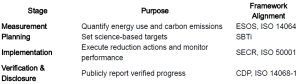
By combining compliance frameworks (like ESOS) with voluntary standards (like SBTi), businesses can bridge regulatory obligations with credible sustainability leadership.
Common Pitfalls in ESOS Compliance
Even well-intentioned organisations often fall short due to:
- Incomplete data coverage, especially from smaller sites or international operations
- Failure to include transport-related energy
- Rushed or generic audits with limited actionable insights
- Weak internal communication between sustainability teams and leadership
- Treating ESOS as a one-off exercise rather than an ongoing management opportunity
The most successful businesses treat ESOS as a continuous improvement cycle, where insights from each phase directly inform their next sustainability strategy.
How NCZ Supports Clients in ESOS and Beyond
We see ESOS as an opportunity to turn compliance into competitive advantage.
Our team of supports businesses through our network of preferred ESOS auditors. Much of the information required for ESOS reporting has been collected during your NCZ certification data collection phase. We provide this information in easy and usable formats for our ESOS auditor partners which makes the ESOS reporting process much simpler, easier, and quicker.
The NCZ Advantage
We believe that ESOS, when approached strategically, becomes an engine for innovation, efficiency, and credibility. It’s not just about energy, it’s about enabling smarter, future-ready business systems.
By transforming energy data into strategic insight, NCZ helps clients:
- Meet ESOS, SECR, and SBTi requirements in one cohesive framework
- Identify hidden efficiency and carbon reduction opportunities
- Reduce operational costs while enhancing sustainability reputation
- Strengthen bids and supplier relationships through credible certification
If your organisation is preparing for ESOS Phase 4, now is the time to act. Data collection and verification take time, and early preparation ensures smooth submission and stronger outcomes.
From Obligation to Opportunity
The future of sustainability is integration. The companies that thrive will not be those doing the minimum to comply, but those turning compliance frameworks into engines for innovation and trust.
By combining the robust measurement and efficiency requirements of ESOS with the science-aligned target setting of SBTi, your organisation builds both credibility and capability.
With the right support, data, and direction, you can go beyond reporting, and lead the transition toward a truly low-carbon economy.
Partner with NCZ
At NCZ, we partner with organisations to make carbon management clear, credible, and commercially valuable.
From measurement and reduction planning to SBTi-aligned strategy and verified certification, we support every step of your net zero journey.
If you’re ready to bridge compliance and strategy, contact us at gozero@nczgroup.com